

You will not be allowed to compare more than 4 products at a time
View compareLACTULOSE COOPER*OS200ML66.7%
LACTULOSE COOPER*OS200ML66.7%
Regular price
€4,35 EUR
Sale price
€4,35 EUR
Regular price
€8,53 EUR
Unit price
per
Tax included.
SKU
029114016Low stock
Vendor
COOPER CONSUMER HEALTH BVDelivery time: 48/72 hours
Free Shipping: Orders over €70
This product page, including its Product Information Leaflet, has been automatically translated.
Description
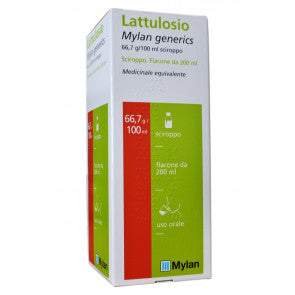
Lactulose Mylan Generics 66.7 g/100 ml syrup
Equivalent Medicine
What it is and what it is used for
Lactulose Mylan Generics is a laxative that stimulates intestinal motility.
Lactulose Mylan Generics is indicated in adults and children for the short-term treatment of occasional constipation.
Consult your doctor if you do not feel better or if you feel worse after 7 days of treatment.
What you need to know before taking the medicine
Do not use Lactulose Mylan Generics if you or your child
- are allergic to the active ingredient or any of the other ingredients of this medicine (listed in paragraph 6),
- have abdominal pain, even of unknown origin,
- experience nausea or vomiting,
- have an obstruction or narrowing of the intestine (intestinal stenosis),
- have bleeding from the rectum, of unknown origin,
- suffer from severe dehydration (excessive loss of water from the body),
- have or are at risk of perforation of the digestive tract (stomach and intestine).
Warnings and precautions
Consult your doctor or pharmacist before using Lactulose Mylan Generics.
Health education notes
First of all, it should be noted that, in most cases, a balanced diet rich in water and fiber (bran, vegetables, and fruit) can permanently resolve the problem of constipation.
Many people think they suffer from constipation if they don't have a bowel movement every day.
This is an incorrect belief, as this situation is completely normal for a large number of individuals.
Instead, constipation occurs when bowel movements are reduced compared to one's personal habits and are associated with the passage of hard stools.
If episodes of constipation occur repeatedly, a doctor should be consulted.
The treatment of chronic or recurrent constipation always requires medical intervention for diagnosis, prescription of medicines, and monitoring during therapy.
Consult your doctor:
• when the need for a laxative arises from a sudden change in previous bowel habits (frequency and characteristics of bowel movements) that has lasted for more than two weeks or when the use of the laxative fails to produce effects.
• if you are elderly or in poor health.
Laxative abuse
Frequent or prolonged use or excessive doses of laxatives can cause persistent diarrhea with consequent loss of water, mineral salts (especially potassium), and other essential nutrients.
In the most severe cases, dehydration (excessive loss of water from the body) or hypokalemia (decrease in blood potassium) may occur, which can cause cardiac or neuromuscular disorders, especially if you are also taking medicines such as cardiac glycosides (medicines used to treat heart problems), diuretics (medicines used to lower blood pressure), or corticosteroids (anti-inflammatories).
Laxative abuse can cause dependence (possible need to progressively increase the dosage), chronic constipation, and intestinal atony (loss of normal intestinal functions).
Possible side effects
Like all medicines, this medicine can cause side effects, although not everybody gets them.
If you experience any of the following side effects, consult your doctor or pharmacist.
Very common (may affect more than 1 in 10 people):
Abdominal pain; flatulence (excessive gas production in the intestine).
Common (may affect up to 1 in 10 people):
Abdominal distension; urgency to evacuate; diarrhea, nausea; reduced appetite; headache.
Uncommon (may affect up to 1 in 100 people): Vomiting
Not known (frequency cannot be estimated from the available data):
Electrolyte loss (salts in the blood), allergic reactions, rash, itching, hives.
Reporting of side effects
If you get any side effects, including those not listed in this leaflet, talk to your doctor or pharmacist. You can also report side effects directly via the national reporting system at: https://www.aifa.gov.it/content/segnalazionireazioni-avverse.
By reporting side effects, you can help provide more information on the safety of this medicine.