

You will not be allowed to compare more than 4 products at a time
View compareMENTOLO SELLA*1% 1FL 100G
MENTOLO SELLA*1% 1FL 100G
Regular price
€3,74 EUR
Sale price
€3,74 EUR
Regular price
€4,50 EUR
Unit price
per
Tax included.
SKU
029818010In stock
Vendor
SELLA SrlDelivery time: 48/72 hours
Free Shipping: Orders over €70
This product page, including its Product Information Leaflet, has been automatically translated.
Description
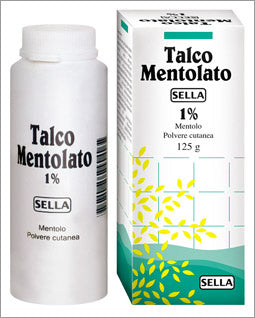
Menthol Sella 1% cutaneous powder
What it is and what it is used for
The medicine is indicated for the symptomatic treatment of skin rashes due to exanthematous diseases, irritation, including friction, itching, and burning in cases of insect bites, sunburn, and burns.
What you need to know before taking the medicine
Hypersensitivity to the active substance or to any of the excipients.
Children up to 30 months of age.
Children with a history of epilepsy or febrile convulsions.
Warnings and precautions
This product contains terpene derivatives which, in excessive doses, can cause neurological disorders such as convulsions in infants and children.
Treatment should not be prolonged for more than 3 days due to the risks associated with the accumulation of terpene derivatives, such as camphor, cineole, niaouli, wild thyme, terpineol, terpine, citral, menthol, and essential oils of pine needles, eucalyptus, and turpentine (due to their lipophilic properties, the rate of metabolism and elimination is unknown) in tissues and the brain, particularly neuropsychological disorders.
A dose higher than recommended should not be used to avoid a greater risk of adverse reactions to the medicine and disorders associated with overdose (see section Overdose).
The medicine should only be used externally; it should not be inhaled and should not be applied to eyes and mucous membranes. It should not be applied to open wounds or on surgical gloves. Menthol Sella 1% cutaneous powder should be used with caution in children up to 6 years of age.
Routine use in daily infant hygiene is not recommended as inhalation can cause pulmonary irritation with the risk of severe respiratory difficulties and death.
If it is suspected that the child has inhaled Menthol Sella, respiratory function must be carefully monitored because the onset of symptoms can be delayed by several hours.
In neonates with glucose-6-phosphate dehydrogenase deficiency exposed to menthol, hemolysis and kernicterus may occur.
Important information about some excipients
Talc
It has been reported that the abuse of medicines administered nasally, containing talc as an excipient, has caused pulmonary granulomas.
Although talc does not cause acute toxicity, fatal cases have been reported following acute exposure to talc.
Inhalation of the powder has caused death, mainly in infants.
Inhalation of talc causes irritation of the respiratory tract, cough, wheezing, sneezing, vomiting, and cyanosis. The onset of these symptoms can occur within 12-24 hours. Acute exposure can cause permanent lung effects.
Intense and prolonged exposure to talc can cause pneumoconiosis.
When injected intravenously, it can cause retinopathy, emboli, and pulmonary hypertension.
The application of talc to open wounds can cause severe granulomatous reactions.
Talc is a highly irritating agent to the eyes and can cause symblepharon, in some cases requiring surgical correction.
Possible side effects
Due to the presence of menthol and in case of non-observance of the recommended doses, there may be a risk of convulsions in children and infants.
Like all medicines, Menthol Sella 1% cutaneous powder can cause side effects, although not everybody gets them.
The side effects of menthol are listed below. There is insufficient data to establish the frequency of the listed effects.
Skin and subcutaneous tissue disorders
Contact dermatitis.
Systemic disorders and conditions related to the administration site
Burns at the application site.
Cases of umbilical granulomas due to contamination of the umbilical cord stump with talcum powder have been reported.
Adhering to the instructions in the package leaflet reduces the risk of side effects. If any of the side effects get serious, or if you notice any side effects not listed in this leaflet, please tell your doctor or pharmacist.
Reporting of side effects
If you get any side effects, including any not listed in this leaflet, tell your doctor or pharmacist. You can also report side effects directly via the national reporting system at: https://www.aifa.gov.it/content/segnalazionireazioni-avverse.
By reporting side effects you can help provide more information on the safety of this medicine.