

You will not be allowed to compare more than 4 products at a time
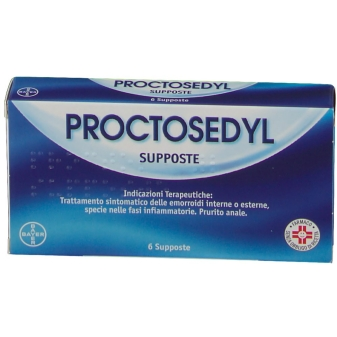
View comparePROCTOSEDYL*6SUPPOSITORIES
PROCTOSEDYL*6SUPPOSITORIES
Regular price
€11,70 EUR
Sale price
€11,70 EUR
Regular price
€12,35 EUR
Unit price
per
Tax included.
SKU
013868043In stock
Vendor
KARO HEALTHCARE ABDelivery time: 48/72 hours
Free Shipping: Orders over €70
This product page, including its Product Information Leaflet, has been automatically translated.
Description
Proctosedyl suppositories
Hydrocortisone acetate, Benzocaine, Esculin, Benzalkonium chloride
What it is and what it is used for
Proctosedyl is an anti-haemorrhoidal for local use, based on corticosteroids (a group of anti-inflammatory drugs).
Proctosedyl is used to treat the symptoms of internal or external haemorrhoids, especially in inflammatory phases. Anal itching.
What you need to know before taking the medicine
Do not use Proctosedyl
- if you are allergic to hydrocortisone acetate, benzocaine, esculin, benzalkonium chloride or any of the other ingredients of this medicine (listed in paragraph 6).
- if you are allergic to other anaesthetics with a chemical structure similar to benzocaine and to substances containing the para group (sulfonamides, promethazine, etc.).
- if you have tuberculous and viral infections of the area to be treated.
Warnings and precautions
Talk to your doctor or pharmacist before using Proctosedyl.
Use with appropriate caution in subjects with damaged mucous membranes, which could cause excessive absorption of the active ingredients.
Corticosteroids can be applied to infected areas only if preceded or accompanied by appropriate antibacterial or antifungal therapy. If therapy is unsuccessful, it is necessary to stop treatment and adequately treat the infection with other measures.
Attention: Use the minimum effective dosage.
Clinical cases suggest that the administration of products containing benzocaine can cause methemoglobinemia (increased level of methemoglobin in the blood) attributable to excessive absorption of benzocaine, particularly in children and the elderly. Symptoms such as cyanosis (pallor, grayish or bluish discoloration of the skin, lips and nails), headache, dizziness, dyspnea (difficulty breathing), fatigue and tachycardia that occur during treatment may indicate methemoglobinemia potentially life-threatening for the patient (see also "If you take more Proctosedyl than you should"). If you notice any of these symptoms, immediately notify your doctor or go to the nearest hospital.
The local application of cortisones in excessive doses and for prolonged periods can lead to generalized reactions due to systemic absorption (Cushing's syndrome, inhibition of the pituitary-adrenal axis [the adrenal gland may be temporarily unable to produce adequate amounts of cortisol at the time of discontinuation]). Therefore, once a favorable clinical effect has been obtained, it is necessary to minimize the frequency of application and the dosage, stopping the product as soon as possible. In any case, it is necessary to limit the local use of steroids to short periods of time.
Contact your doctor if you experience blurred vision or other visual disturbances.
Anti-doping test
For those involved in sports: the use of the drug without medical necessity constitutes doping and can lead to a positive anti-doping test.
Possible side effects
Like all medicines, this medicine can cause side effects, although not everybody gets them.
These effects generally disappear after a short period, however if you experience any of the following symptoms you should contact your doctor or pharmacist: local allergic reactions that present with edema, redness and itching.
The following may occur with unknown frequency (frequency cannot be estimated from the available data): blurred vision
Following the instructions in the package leaflet reduces the risk of side effects.
Reporting of side effects
If you get any side effects, including any not listed in this leaflet, talk to your doctor or pharmacist. You can also report side effects directly via the national reporting system at: https://www.aifa.gov.it/content/segnalazionireazioni-avverse.
By reporting side effects, you can help provide more information on the safety of this medicine.