

You will not be allowed to compare more than 4 products at a time
View compareRINAZINA*AD DROPS 10ML 10MG 0.1%
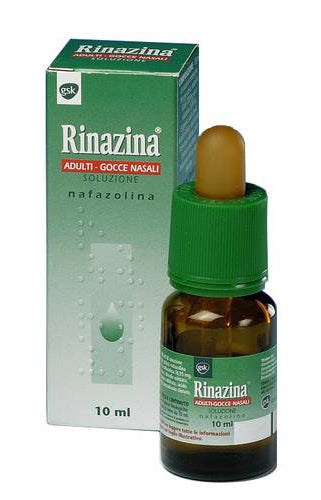
RINAZINA*AD DROPS 10ML 10MG 0.1%
Regular price
€10,74 EUR
Sale price
€10,74 EUR
Regular price
€12,20 EUR
Unit price
per
Tax included.
SKU
000590012In stock
Vendor
HALEON ITALY SrlDelivery time: 48/72 hours
Free Shipping: Orders over €70
This product page, including its Product Information Leaflet, has been automatically translated.
Description
RINAZINA 1 MG/ML NASAL DROPS, SOLUTION
Naphazoline
What it is and what it is used for
RINAZINA contains the active ingredient naphazoline nitrate, which belongs to a group of medicines called NASAL DECONGESTANTS, sympathomimetics for topical use, with vasoconstrictive action, meaning they reduce the dilation of blood vessels in the nasal mucosa.
RINAZINA is indicated for clearing a blocked nose (nasal decongestant) in cases of:
• common cold (rhinitis) and throat inflammation with catarrh (acute catarrhal pharyngitis);
• allergic rhinitis;
• inflammation of the mucous membrane of the facial bone cavities around the nose (acute sinusitis).
RINAZINA is for use in adults and children aged 12 years and over.
Consult your doctor if you do not feel better or if you feel worse after a few days. Treatment should not last more than one week.
What you need to know before taking this medicine
DO NOT use RINAZINA:
• if you are allergic (hypersensitive) to naphazoline or any of the other ingredients of this medicine (listed in section 6);
• if you suffer from heart disease and very high blood pressure (severe hypertension), optic nerve disease with increased eye pressure (glaucoma), or increased production of thyroid hormones (hyperthyroidism);
• If you are taking or will be taking, within two weeks of discontinuing RINAZINA, medicines for the treatment of depression.
The medicine should not be taken by children under 12 years of age.
Warnings and precautions
Ask your doctor or pharmacist for advice before using RINAZINA:
• If you are elderly
• If you have an enlarged prostate (prostatic hypertrophy), as you may experience difficulty urinating (urinary retention).
• If you suffer from heart and blood vessel diseases (cardiovascular diseases) and especially high blood pressure (hypertension), the use of RINAZINA should only take place after consulting a doctor each time.
• Continuous use of medicines, such as RINAZINA, which reduce the dilation of blood vessels (vasoconstrictors), can alter the normal function of the nasal mucosa and the paranasal sinuses and can also lead to drug dependence (addiction). Prolonged use can be harmful.
• The use, especially if continuous, of local medicines such as RINAZINA can cause allergic reactions (sensitisation phenomena). In this case, stop treatment and consult your doctor.
• With the use of medicines that stimulate the sympathetic nervous system (sympathomimetics), like RINAZINA, rare cases of a syndrome with symptoms such as headache, nausea, vomiting, and visual disturbances (reversible posterior encephalopathy/reversible cerebral vasoconstriction syndrome) have occurred, which improved and resolved after medical treatment.
• Stop using RINAZINA and consult your doctor immediately if you experience symptoms and signs of reversible posterior encephalopathy/reversible cerebral vasoconstriction syndrome.
Children and adolescents
RINAZINA is contraindicated in children under 12 years of age.
Possible side effects
Like all medicines, this medicine can cause side effects, although not everybody gets them.
RINAZINA can cause local swelling of the nasal mucosa due to intense vasodilation of blood vessels in the nose (rebound sensitisation phenomena), worsening the feeling of a blocked nose instead of improving it.
Rapid absorption of naphazoline through inflamed mucous membranes can lead to systemic effects such as increased blood pressure (hypertension), reduced heart rate (reflex bradycardia), severe headache (cephalea), and difficulty urinating (urination disorders).
Reporting of side effects
If you get any side effects, including any not listed in this leaflet, tell your doctor or pharmacist. You can also report side effects directly via the national reporting system at: https://www.aifa.gov.it/content/segnalazionireazioni-avverse.
By reporting side effects you can help provide more information on the safety of this medicine.
