

You will not be allowed to compare more than 4 products at a time
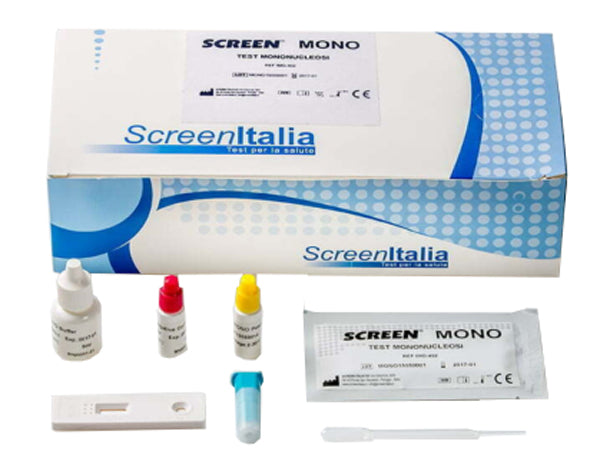
View compareRAPID SCREEN TEST MONONUCLEOSIS SCREEN TEST QUALITATIVE DETECTION OF HETEROPHIL ANTIBODIES IN WHOLE BLOOD/SERUM/PLASMA BY IMMUNOCHROMATOGRAPHY 25 PIECES
RAPID SCREEN TEST MONONUCLEOSIS SCREEN TEST QUALITATIVE DETECTION OF HETEROPHIL ANTIBODIES IN WHOLE BLOOD/SERUM/PLASMA BY IMMUNOCHROMATOGRAPHY 25 PIECES
Regular price
€50,83 EUR
Sale price
€50,83 EUR
Regular price
€48,80 EUR
Unit price
per
Tax included.
SKU
988143828Low stock
Vendor
SCREEN ITALIA SrlDelivery time: 48/72 hours
Free Shipping: Orders over €70
This product page, including its Product Information Leaflet, has been automatically translated.
Description
ScreenItalia
MONONUCLEOSIS TEST
Description
Immunochromatographic test for the qualitative detection of heterophile antibodies of infectious mononucleosis in whole blood, serum, or plasma to aid in the diagnosis of infectious mononucleosis.
In this test, antigen extracted from bovine erythrocytes is immobilized in the test line zone. During the test, the sample reacts with bovine erythrocyte extract antigen-coated particles that have been applied to the labeled pad. This compound migrates chromatographically along the test and interacts with the immobilized bovine erythrocyte extract antigen.
If the sample contains heterophile antibodies of infectious mononucleosis, a colored line appears in the test line zone, indicating a positive result.
If the sample does not contain heterophile antibodies of infectious mononucleosis, no colored line will appear in the test line zone, indicating a negative result.
As a procedural control, a line always appears in the test control zone, indicating that a correct amount of sample has been added and the membrane reaction has occurred correctly.
Instructions for use
Sample collection and preparation
The test can be performed on whole blood (from venipuncture or fingertip), serum, or plasma samples.
- Whole blood samples from venipuncture: collect an anti-coagulated blood sample (sodium or lithium heparin, potassium or sodium EDTA, sodium oxalate, sodium citrate) following standard laboratory procedures.
- Whole blood samples from fingertip: Wash the patient's hand with soap and warm water or clean with an alcohol-soaked swab. Allow to dry. Massage the hand without touching the puncture site. Puncture the skin with a sterile lancet. Remove the first drop of blood. Gently massage the hand from the wrist to the palm to the finger to produce a round drop of blood. Using a capillary tube, collect the blood sample: place the end of the capillary tube in contact with the blood until it fills with approximately 50 mcL. Avoid air bubble formation.
Separate serum or plasma from blood as soon as possible to avoid hemolysis. Use only clear and non-hemolyzed samples.
The test should be performed immediately after sample collection.
Do not leave samples at room temperature for long periods of time. Serum and plasma samples can be stored at 2-8 °C for up to 3 days.
For long-term storage, samples should be stored below -20 °C.
Whole blood collected by venipuncture should be stored at 2-8 °C if the test is to be performed within 2 days of collection. Do not freeze whole blood samples. Whole blood samples obtained by fingertip should be tested immediately.
Bring samples to room temperature before testing. Frozen samples should be completely thawed and thoroughly mixed before testing. Samples should not be repeatedly frozen and thawed.
If samples are to be shipped, they must be packaged according to local regulations regarding the transport of etiological agents.
Performing the test
Bring the test, sample, buffer and/or control solutions to room temperature (15-30 °C) before performing the test.
Remove the test from the sealed pouch and use it as soon as possible. Best results are obtained if the test is performed within one hour of opening the pouch.
Place the test on a clean, flat surface.
- Serum or plasma samples: hold the dropper vertically and transfer 1 drop of serum or plasma (approximately 25 mcL) to the sample well on the test cassette and 1 drop of buffer (approximately 55 mcL) and start the timer.
- Whole blood samples from venipuncture: hold the dropper vertically and transfer 2 drops of whole blood (approximately 50 mcL) to the sample well (S) on the test cassette, then add 1 drop of buffer (approximately 55 mcL), and start the timer.
- Whole blood samples from fingertip: fill the capillary tube with the blood sample and transfer approximately 50 mcL of whole blood from fingertip to the sample well (S) of the test cassette, then add 1 drop of buffer (approximately 55 mcL) and start the timer.
Wait for the colored line(s) to appear. Read the results at 5 minutes. Do not interpret results after 10 minutes.
Interpretation of results
POSITIVE: two colored lines appear. One line appears in the control zone (C) and the other appears in the test zone (T).
The intensity of the color of the line in the test zone (T) varies depending on the concentration of heterophile antibodies of infectious mononucleosis present in the sample. Therefore, any shade of color in the test line zone (T) should be considered positive.
NEGATIVE: a colored line appears in the control zone (C). No colored line appears in the test zone (T).
INVALID: no control line (C) appears. The most likely reasons for the control line (C) not appearing are insufficient sample volume or incorrect procedural techniques. Review the procedure and repeat the test with a new kit. If the problem persists, stop using the kit immediately and contact your local distributor.
Warnings
For in vitro diagnostic use only.
Do not use beyond the expiration date.
The test must remain in the sealed pouch until use.
Do not eat, drink, or smoke in the sample or kit handling area.
Do not use if the package is damaged.
Handle all samples and controls as if they contain infectious agents. Observe established precautions against microbiological risk throughout the test and follow standard procedures for the proper disposal of samples and controls.
Human plasma used in the Positive and Negative Control solutions has been tested with ELISA for the presence of human immunodeficiency virus type HIV-1/HIV-2 antibodies, as well as Hepatitis B surface antigen (HBsAg) and anti-HCV, and found negative. However, exercise caution in handling and disposing of solutions.
Wear protective clothing such as laboratory coats, disposable gloves, and protective eyewear when analyzing samples.
Used tests must be disposed of according to local regulations.
Humidity and temperature can negatively affect results.
The test should be used for the detection of infectious mononucleosis antibodies only on whole blood, serum, or plasma samples. This qualitative test cannot determine either the quantitative value or the rate of increase of infectious mononucleosis antibodies.
The test will only indicate the presence of infectious mononucleosis antibodies in the sample and should not be used as the sole criterion for the diagnosis of infectious mononucleosis infection.
As with all rapid tests, all results must be interpreted in conjunction with other clinical information available to the physician.
If the test result is negative and clinical symptoms persist, further analysis with other clinical methods is recommended. A negative result does not in any way preclude the possibility of infectious mononucleosis infection.
Storage
Store packaged in the sealed pouch at room temperature or refrigerated (2-30 °C). Do not freeze.
The test is stable until the expiration date printed on the sealed package. The test must remain in the sealed package until use. Do not use beyond the expiration date.
Validity with intact packaging: 24 months.
Format
25 tests
Code. SC-0647-25
Immunochromatographic test for the qualitative detection of heterophile antibodies of infectious mononucleosis in whole blood, serum, or plasma to aid in the diagnosis of infectious mononucleosis.
In this test, antigen extracted from bovine erythrocytes is immobilized in the test line zone. During the test, the sample reacts with bovine erythrocyte extract antigen-coated particles that have been applied to the labeled pad. This compound migrates chromatographically along the test and interacts with the immobilized bovine erythrocyte extract antigen.
If the sample contains heterophile antibodies of infectious mononucleosis, a colored line appears in the test line zone, indicating a positive result.
If the sample does not contain heterophile antibodies of infectious mononucleosis, no colored line will appear in the test line zone, indicating a negative result.
As a procedural control, a line always appears in the test control zone, indicating that a correct amount of sample has been added and the membrane reaction has occurred correctly.
Instructions for use
Sample collection and preparation
The test can be performed on whole blood (from venipuncture or fingertip), serum, or plasma samples.
- Whole blood samples from venipuncture: collect an anti-coagulated blood sample (sodium or lithium heparin, potassium or sodium EDTA, sodium oxalate, sodium citrate) following standard laboratory procedures.
- Whole blood samples from fingertip: Wash the patient's hand with soap and warm water or clean with an alcohol-soaked swab. Allow to dry. Massage the hand without touching the puncture site. Puncture the skin with a sterile lancet. Remove the first drop of blood. Gently massage the hand from the wrist to the palm to the finger to produce a round drop of blood. Using a capillary tube, collect the blood sample: place the end of the capillary tube in contact with the blood until it fills with approximately 50 mcL. Avoid air bubble formation.
Separate serum or plasma from blood as soon as possible to avoid hemolysis. Use only clear and non-hemolyzed samples.
The test should be performed immediately after sample collection.
Do not leave samples at room temperature for long periods of time. Serum and plasma samples can be stored at 2-8 °C for up to 3 days.
For long-term storage, samples should be stored below -20 °C.
Whole blood collected by venipuncture should be stored at 2-8 °C if the test is to be performed within 2 days of collection. Do not freeze whole blood samples. Whole blood samples obtained by fingertip should be tested immediately.
Bring samples to room temperature before testing. Frozen samples should be completely thawed and thoroughly mixed before testing. Samples should not be repeatedly frozen and thawed.
If samples are to be shipped, they must be packaged according to local regulations regarding the transport of etiological agents.
Performing the test
Bring the test, sample, buffer and/or control solutions to room temperature (15-30 °C) before performing the test.
Remove the test from the sealed pouch and use it as soon as possible. Best results are obtained if the test is performed within one hour of opening the pouch.
Place the test on a clean, flat surface.
- Serum or plasma samples: hold the dropper vertically and transfer 1 drop of serum or plasma (approximately 25 mcL) to the sample well on the test cassette and 1 drop of buffer (approximately 55 mcL) and start the timer.
- Whole blood samples from venipuncture: hold the dropper vertically and transfer 2 drops of whole blood (approximately 50 mcL) to the sample well (S) on the test cassette, then add 1 drop of buffer (approximately 55 mcL), and start the timer.
- Whole blood samples from fingertip: fill the capillary tube with the blood sample and transfer approximately 50 mcL of whole blood from fingertip to the sample well (S) of the test cassette, then add 1 drop of buffer (approximately 55 mcL) and start the timer.
Wait for the colored line(s) to appear. Read the results at 5 minutes. Do not interpret results after 10 minutes.
Interpretation of results
POSITIVE: two colored lines appear. One line appears in the control zone (C) and the other appears in the test zone (T).
The intensity of the color of the line in the test zone (T) varies depending on the concentration of heterophile antibodies of infectious mononucleosis present in the sample. Therefore, any shade of color in the test line zone (T) should be considered positive.
NEGATIVE: a colored line appears in the control zone (C). No colored line appears in the test zone (T).
INVALID: no control line (C) appears. The most likely reasons for the control line (C) not appearing are insufficient sample volume or incorrect procedural techniques. Review the procedure and repeat the test with a new kit. If the problem persists, stop using the kit immediately and contact your local distributor.
Warnings
For in vitro diagnostic use only.
Do not use beyond the expiration date.
The test must remain in the sealed pouch until use.
Do not eat, drink, or smoke in the sample or kit handling area.
Do not use if the package is damaged.
Handle all samples and controls as if they contain infectious agents. Observe established precautions against microbiological risk throughout the test and follow standard procedures for the proper disposal of samples and controls.
Human plasma used in the Positive and Negative Control solutions has been tested with ELISA for the presence of human immunodeficiency virus type HIV-1/HIV-2 antibodies, as well as Hepatitis B surface antigen (HBsAg) and anti-HCV, and found negative. However, exercise caution in handling and disposing of solutions.
Wear protective clothing such as laboratory coats, disposable gloves, and protective eyewear when analyzing samples.
Used tests must be disposed of according to local regulations.
Humidity and temperature can negatively affect results.
The test should be used for the detection of infectious mononucleosis antibodies only on whole blood, serum, or plasma samples. This qualitative test cannot determine either the quantitative value or the rate of increase of infectious mononucleosis antibodies.
The test will only indicate the presence of infectious mononucleosis antibodies in the sample and should not be used as the sole criterion for the diagnosis of infectious mononucleosis infection.
As with all rapid tests, all results must be interpreted in conjunction with other clinical information available to the physician.
If the test result is negative and clinical symptoms persist, further analysis with other clinical methods is recommended. A negative result does not in any way preclude the possibility of infectious mononucleosis infection.
Storage
Store packaged in the sealed pouch at room temperature or refrigerated (2-30 °C). Do not freeze.
The test is stable until the expiration date printed on the sealed package. The test must remain in the sealed package until use. Do not use beyond the expiration date.
Validity with intact packaging: 24 months.
Format
25 tests
Code. SC-0647-25