

You will not be allowed to compare more than 4 products at a time
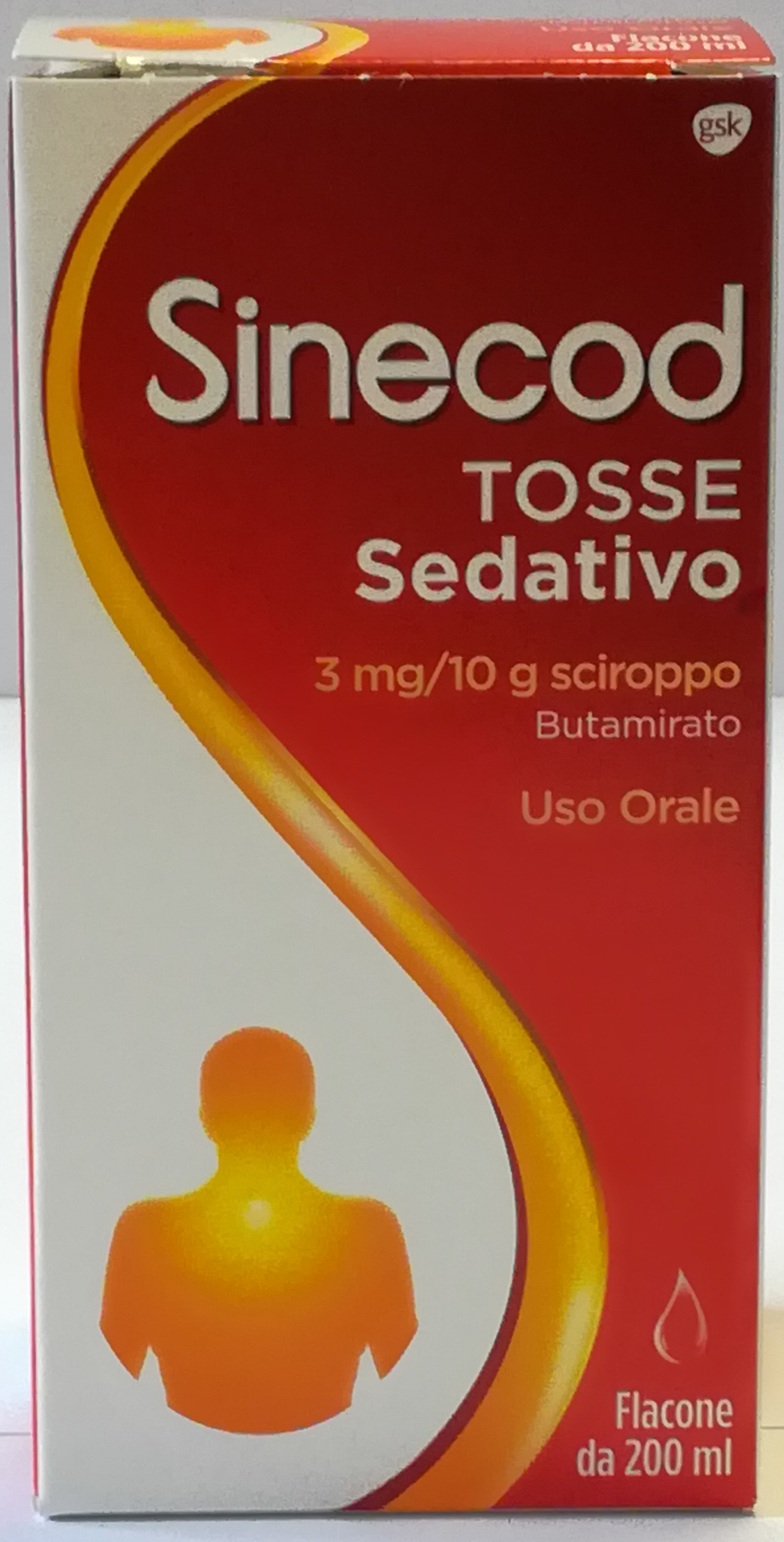
View compareSINECOD COUGH SED*200ML3MG/10G
SINECOD COUGH SED*200ML3MG/10G
Regular price
€9,89 EUR
Sale price
€9,89 EUR
Regular price
€11,90 EUR
Unit price
per
Tax included.
SKU
021483146In stock
Vendor
HALEON ITALY SrlDelivery time: 48/72 hours
Free Shipping: Orders over €70
This product page, including its Product Information Leaflet, has been automatically translated.
Description
Sinecod Cough Sedative 2 mg/ml oral drops, solution
Sinecod Cough Sedative 3 mg/10 g syrup
Sinecod Cough Sedative 5 mg lozenges
Butamirate
What it is and what it is used for
Sinecod Cough Sedative contains the active ingredient butamirate, which reduces the cough reflex.
Sinecod Cough Sedative is indicated as a cough sedative.
Consult your doctor if you do not feel better or feel worse after 7 days, or if the cough persists for more than 7 days and you have a fever, difficulty breathing, or chest pain.
What you need to know before taking the medicine
Do not take Sinecod Cough Sedative lozenges
• if you are allergic to butamirate, to chemically related substances, or to any of the other ingredients of this medicine (listed in section 6)
• if the patient is a child under 12 years of age
• if you are in the first 3 months of pregnancy.
Do not take Sinecod Cough Sedative syrup and oral drops
• if you are allergic to butamirate, to chemically related substances, or to any of the other ingredients of this medicine (listed in section 6)
• if the patient is a child under 6 years of age
• if you are in the first 3 months of pregnancy.
Warnings and precautions
Consult your doctor or pharmacist before taking Sinecod Cough Sedative.
Consult your doctor before taking this medicine:
• if you have kidney and/or liver insufficiency.
Do not use Sinecod Cough Sedative if you are using medicines that promote mucus elimination (expectorants) (see section Other medicines and Sinecod Cough Sedative).
Children and adolescents
Sinecod Cough Sedative lozenges should not be administered to children under 12 years of age.
Sinecod Cough Sedative syrup and oral drops should not be administered to children under 6 years of age.
Possible side effects
Like all medicines, this medicine can cause side effects, although not everybody gets them.
Rare side effects (may affect up to 1 in 1,000 people)
• dizziness
• drowsiness
• nausea
• diarrhea
• hives
Side effects with unknown frequency (frequency cannot be estimated from the available data)
• hypersensitivity reactions
Following the instructions in the package leaflet reduces the risk of side effects.
Reporting of side effects
If you get any side effects, including any not listed in this leaflet, talk to your doctor or pharmacist. You can also report side effects directly via the national reporting system at: https://www.aifa.gov.it/content/segnalazionireazioni-avverse.
By reporting side effects, you can help provide more information on the safety of this medicine.
