

You will not be allowed to compare more than 4 products at a time
View compareVOLTADOL*5MED PATCH 140MG
VOLTADOL*5MED PATCH 140MG
Regular price
€15,19 EUR
Sale price
€15,19 EUR
Regular price
€16,50 EUR
Unit price
per
Tax included.
SKU
035520016Low stock
Vendor
HALEON ITALY SrlDelivery time: 48/72 hours
Free Shipping: Orders over €70
This product page, including its Product Information Leaflet, has been automatically translated.
Description
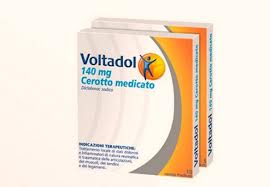
Voltadol 140 mg medicated plaster
Diclofenac sodium
What it is and what it is used for
Voltadol contains the active ingredient diclofenac sodium. Diclofenac belongs to the class of non-steroidal anti-inflammatory drugs (NSAIDs) and is used to reduce pain and inflammation.
Voltadol is indicated for the local treatment of painful and inflammatory conditions of a rheumatic or traumatic nature affecting:
• joints
• muscles
• tendons and ligaments
Consult your doctor if you do not feel better or if you feel worse after 7 days, if the problem recurs or you notice any recent changes in its characteristics.
What you need to know before taking the medicine
Do not use Voltadol
• if you are allergic to diclofenac sodium, acetylsalicylic acid, other non-steroidal anti-inflammatory drugs (NSAIDs) or any of the other ingredients of this medicine (listed in paragraph 6);
• if in the past, after taking acetylsalicylic acid or other non-steroidal anti-inflammatory drugs (NSAIDs), you had an allergic reaction that manifested as asthma (difficulty breathing caused by inflammation and narrowing of the bronchi), angioedema (swelling of the face, lips, tongue and/or throat with difficulty swallowing and/or breathing), urticaria (itchy skin rash), or acute rhinitis (runny nose due to acute forms of nasal mucosal inflammation);
• if your skin has lesions of any kind, such as exudative dermatitis (skin irritation with exudate, a liquid that forms with inflammation), eczema (skin rash), infected lesion, burns or wounds;
• if you are in the third trimester of pregnancy (see paragraph "Pregnancy, breastfeeding and fertility");
• if you have a lesion of the stomach or the first part of the intestine (peptic ulcer);
• if the person to be treated is a child or adolescent under 16 years of age.
Warnings and precautions
Talk to your doctor or pharmacist before using Voltadol.
Talk to your doctor before using Voltadol:
• if you have or have had asthma;
• if you have or have had chronic diseases with bronchial obstruction;
• if you have or have had allergic rhinitis (inflammation of the nose due to allergy);
• if you have or have had inflammation of the nasal mucosa (nasal polyp);
because you may experience asthma attacks, local skin inflammation, mucosal inflammation (Quincke's edema) or urticaria more easily than other patients.
Pay particular attention:
• do not ingest Voltadol; wash your hands after use;
• do not apply Voltadol to damaged, diseased or open skin;
• avoid contact of Voltadol with the eyes or mucous membranes, for example of the mouth. If this occurs, wash the area immediately with running water and contact your doctor;
• do not use Voltadol with other anti-inflammatory medicines taken orally, by injection, rectally or applied to the skin;
• the use, especially if for long periods of time, of medicines for local use can cause allergic reactions. If this occurs, stop treatment with Voltadol immediately and consult your doctor who will give you appropriate therapy;
• do not use Voltadol with an occlusive dressing, i.e., covering the affected area with a plastic film that does not allow air to pass through. However, you can use Voltadol with a gauze that allows air to pass through;
• avoid direct sunlight exposure, including sunlight from sunbeds, for about 1 day after removing the Voltadol patch, this will reduce the risk of sun-related skin reactions;
• if you use diclofenac for long periods of time, you may experience side effects affecting the entire body; do not exceed the recommended dose.
Consult your doctor if:
• if you are elderly;
• if you have kidney, heart or liver problems;
• if you have had a peptic ulcer (lesion of the stomach lining and the first part of the intestine);
• if you are a woman and have fertility problems, if you are undergoing fertility investigations, or if you intend to become pregnant.
Stop treatment if you develop a skin rash after applying the medicated plaster.
If you use Voltadol with other medicines containing diclofenac, you may experience skin reactions, even severe ones (Stevens-Johnson syndrome, Lyell's syndrome).
Children and adolescents
Voltadol should not be used in children and adolescents under 16 years of age.
Possible side effects
Like all medicines, this medicine can cause side effects, although not everyone gets them.
Common side effects (may affect up to 1 in 10 people)
• rash (skin eruption), eczema (skin inflammation), erythema (skin redness), dermatitis (including allergic dermatitis and contact dermatitis), itching
• reactions at the application site of the plaster.
Rare side effects (may affect up to 1 in 1,000 people)
• bullous dermatitis (skin inflammation with the appearance of blisters)
• dry skin
• burning sensation at the application site.
Very rare side effects (may affect up to 1 in 10,000 people)
• allergic reactions including urticaria, severe allergic reactions (anaphylactoid reactions and angioneurotic edema)
• angioedema (swelling of the face, lips, tongue and/or throat with difficulty swallowing and/or breathing)
• skin rash with the appearance of pustules
• asthma (difficulty breathing caused by inflammation and narrowing of the bronchi)
• appearance of spots, swelling or redness on the skin after exposure to sunlight or sunbeds.
Reporting of side effects
If you get any side effects, including any not listed in this leaflet, talk to your doctor or pharmacist. You can also report side effects directly via the national reporting system at: https://www.aifa.gov.it/content/segnalazionireazioni-avverse.
By reporting side effects you can help provide more information on the safety of this medicine.
