

You will not be allowed to compare more than 4 products at a time
View compareZIRTEC DECONG ANT*6CPR 5+120MG
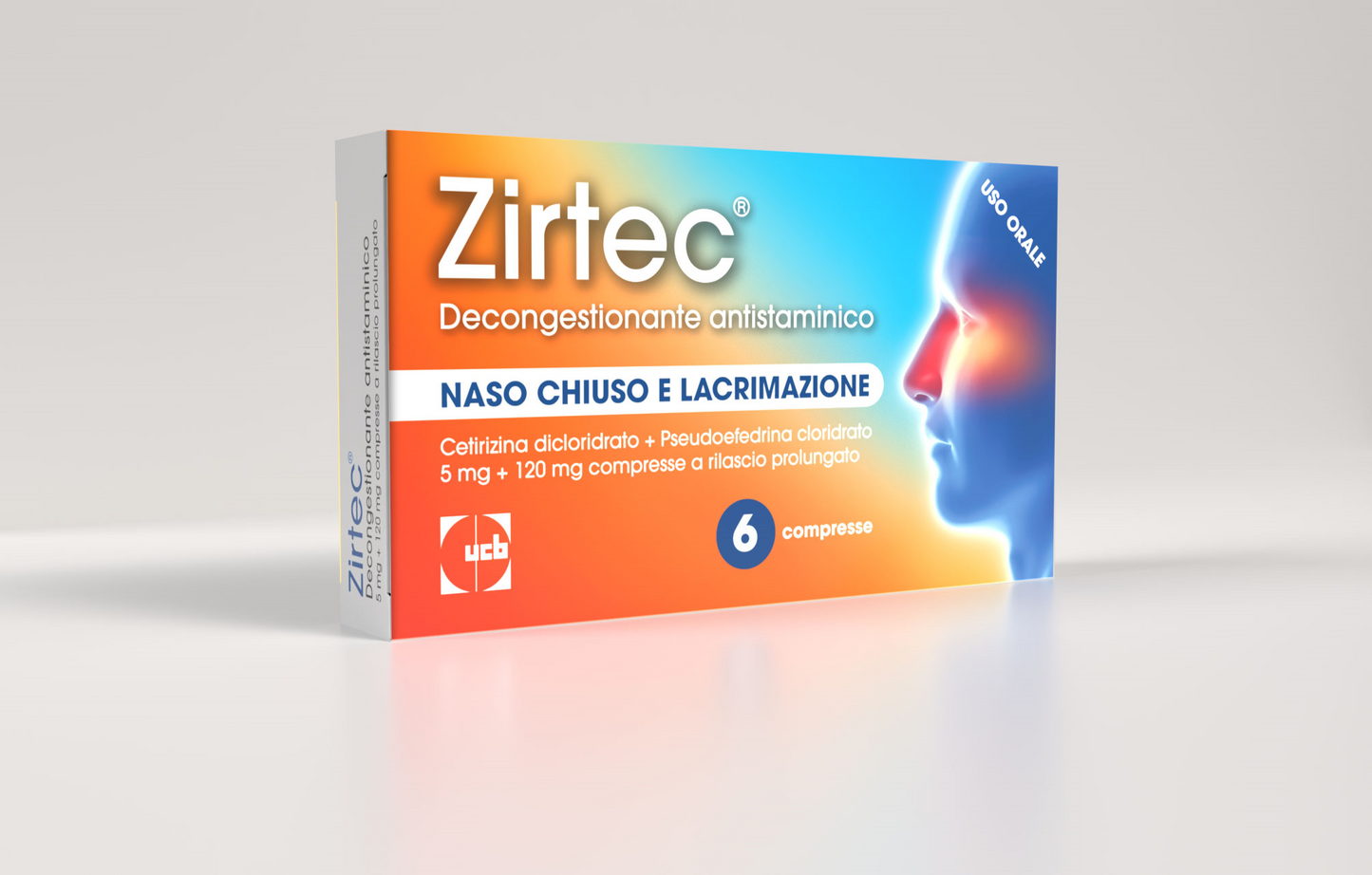
ZIRTEC DECONG ANT*6CPR 5+120MG
Regular price
€7,32 EUR
Sale price
€7,32 EUR
Regular price
€7,99 EUR
Unit price
per
Tax included.
SKU
031224037Low stock
Vendor
UCB PHARMA SpADelivery time: 48/72 hours
Free Shipping: Orders over €70
This product page, including its Product Information Leaflet, has been automatically translated.
Description
Zirtec Decongestant Antihistamine 5 mg + 120 mg prolonged-release tablets
Cetirizine dihydrochloride + pseudoephedrine hydrochloride
What it is and what it is used for
Zirtec Decongestant Antihistamine prolonged-release tablets contain two active ingredients: cetirizine dihydrochloride, which is an antihistamine (blocks histamine, a substance released in the body during an allergic reaction or inflammation) and pseudoephedrine hydrochloride (a vasoconstrictor that decongests the nasal mucosa).
Zirtec Decongestant Antihistamine is used to relieve the symptoms of acute inflammation of the nasal mucosa (acute rhinitis) such as nasal congestion, runny nose, nasal and/or ocular itching, and watery eyes.
What you need to know before taking the medicine
Do not take Zirtec Decongestant Antihistamine
• if you are allergic to cetirizine, pseudoephedrine, ephedrine, piperazine, or any of the other ingredients of this medicine (listed in section 6);
• if you have very high blood pressure (severe hypertension) or hypertension not controlled by medication, or severe problems with the coronary arteries that supply the heart (severe coronary artery disease);
• if you suffer from severe acute (sudden) or chronic (long-term) kidney disease or kidney failure/severe kidney problems (severe renal failure);
• if your thyroid is overactive and the problem is not controlled (uncontrolled hyperthyroidism);
• if you have severe heart rhythm disturbances (severe arrhythmia);
• if you have a tumor called pheochromocytoma;
• if you suffer from abnormally high pressure inside the eye (elevated intraocular pressure or glaucoma);
• if you have problems urinating (urinary retention);
• if you have had a problem with the blood vessels of the brain called a stroke;
• if you are at risk of developing a brain hemorrhage (hemorrhagic stroke);
• if you are taking dihydroergotamine;
• if you are being treated with certain antidepressants called monoamine oxidase inhibitors (MAOIs) or have taken them within the last two weeks (see Other medicines and Zirtec Decongestant Antihistamine);
• if you are pregnant;
• if you are breastfeeding;
• in children under 12 years of age.
Warnings and precautions
Take Zirtec Decongestant Antihistamine only for short-term treatments (see section 3).
Talk to your doctor or pharmacist before taking Zirtec Decongestant Antihistamine if:
• you have diabetes;
• your thyroid is overactive (hyperthyroidism);
• you have high blood pressure;
• your heart beats too fast (tachycardia) or irregularly (cardiac arrhythmia);
• you suffer from heart problems because the coronary arteries that supply it do not provide enough blood (ischemic heart disease);
• you have a medical condition where the activity of the medicine may cause problems, in patients predisposed to urinary retention (e.g., spinal cord injury, prostate hyperplasia, prostate hypertrophy, or bladder outflow obstruction) as Zirtec Decongestant Antihistamine may increase the risk of urinary retention;
• your liver and/or kidneys do not function well (moderate hepatic or renal insufficiency);
• you have an enlarged prostate (prostatic hypertrophy) or if you have difficulty urinating;
• you are at risk of hypercoagulation, as in inflammatory bowel disease;
• you are over 65 years old.
Caution is required when using Zirtec Decongestant Antihistamine if you are being treated with medicines that could predispose to the onset of hemorrhagic stroke, such as other nasal decongestants; medicines that reduce the dilation of blood vessels (vasoconstrictors) and other medicines that could modify the effect of Zirtec Decongestant Antihistamine (see Other medicines and Zirtec Decongestant Antihistamine).
With Zirtec Decongestant Antihistamine, sudden abdominal pain or rectal bleeding may occur due to inflammation of the colon (ischemic colitis). If you experience these gastrointestinal symptoms, stop using Zirtec Decongestant Antihistamine and contact your doctor or seek immediate medical attention. See section 4.
With Zirtec Decongestant Antihistamine, a reduction in blood flow to the optic nerve may occur. If sudden vision loss occurs, stop taking Zirtec Decongestant Antihistamine and contact your doctor or a healthcare facility immediately (see section 4).
If you develop fever and numerous small blisters, stop treatment with Zirtec Decongestant Antihistamine and contact your doctor.
Cases of reversible posterior encephalopathy syndrome (PRES) and reversible cerebral vasoconstriction syndrome (RCVS) have been reported following the use of pseudoephedrine-containing medicines. PRES and RCVS are rare conditions that can lead to reduced blood supply to the brain. Stop using Zirtec Decongestant Antihistamine immediately and seek immediate medical attention if you develop symptoms that could be signs of PRES or RCVS (see section 4 Possible side effects for symptoms).
If you are scheduled for an allergy test, inform your doctor because you must stop taking Zirtec Decongestant Antihistamine for a few days before the test. This medicine may alter the results of the allergy test.
Children
Do not give this medicine to children under 12 years of age.
Possible side effects
Like all medicines, Zirtec Decongestant Antihistamine can cause side effects, although not everybody gets them.
Stop immediately treatment with Zirtec Decongestant Antihistamine and urgently consult a doctor if you develop symptoms that could be signs of reversible posterior encephalopathy syndrome (PRES) and reversible cerebral vasoconstriction syndrome (RCVS). These include:
• severe headache with sudden onset;
• nausea;
• vomiting;
• confusion;
• seizures;
• changes in vision.
You may notice the following side effects:
Common (may affect up to 1 in 10 people):
accelerated heartbeat, dry mouth, nausea, weakness (asthenia), dizziness, drowsiness, headache, vertigo, nervousness, insomnia;
Uncommon (may affect up to 1 in 100 people):
agitation, anxiety;
Rare (may affect up to 1 in 1,000 people):
heart rhythm disturbances, hypersensitivity reactions (including anaphylactic shock), convulsions, tremor, hallucinations, paleness, high blood pressure, vomiting, altered liver function, difficulty urinating, dry skin, rash, excessive sweating, hives;
Very rare (may affect up to 1 in 10,000 people): fixed drug eruption, angioedema (severe allergic reaction causing swelling of the face or throat), circulatory collapse, inflammation of the colon due to insufficient blood supply (ischemic colitis), cerebrovascular event (stroke), psychosis, altered taste;
Not known (frequency cannot be estimated from the available data):
serious conditions affecting cerebral blood vessels known as reversible posterior encephalopathy syndrome (PRES) and reversible cerebral vasoconstriction syndrome (RCVS), aggression, confusional state, depression, tics, behavior characterized by enthusiasm and excitement (euphoria), suicidal ideation, paraesthesia, restlessness, involuntary muscle contractions that force certain parts of the body into abnormal and often painful postures or movements (dystonia), movement disorders (dyskinesia), memory loss (amnesia), memory impairment, syncope, accommodation disorder (ocular disorder), blurred vision and difficulty focusing, prolonged abnormal pupil dilation, eye pain, visual impairment, abnormal intolerance to visual perception of light, reduced blood flow to the optic nerve (ischemic optic neuropathy), uncontrolled circular eye movements (oculogyric crisis), palpitations, heart attack (myocardial infarction), low blood pressure, difficulty breathing (dyspnea), diarrhea, abdominal discomfort, involuntary urine loss, difficulty urinating (urinary retention), erectile dysfunction, swelling due to fluid accumulation, malaise, severe skin reactions characterized by fever and numerous small superficial pustules surrounded by large reddened areas, itching*, joint pain (arthralgia), muscle pain (myalgia).
Isolated cases of liver inflammation (hepatitis) have been reported when cetirizine is administered alone.
*Itching may also occur after discontinuation of the medicine.
Reporting of side effects
If you get any side effects, including any not listed in this leaflet, talk to your doctor or pharmacist. You can also report side effects directly via the national reporting system at: https://www.aifa.gov.it/content/segnalazionireazioni-avverse.
By reporting side effects, you can help provide more information on the safety of this medicine.
